Published August 26, 2025
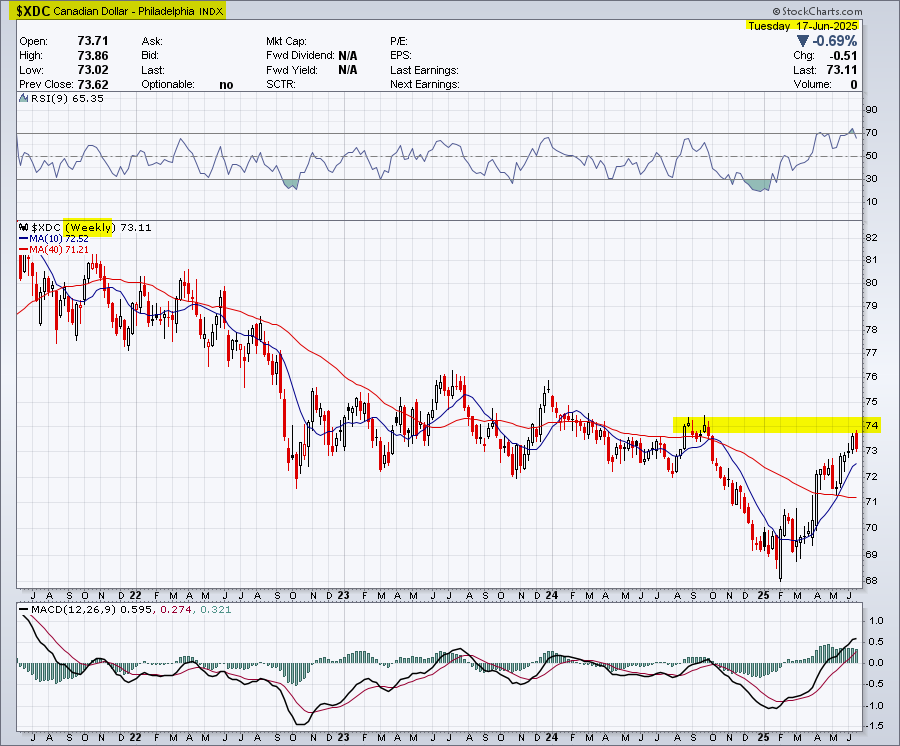
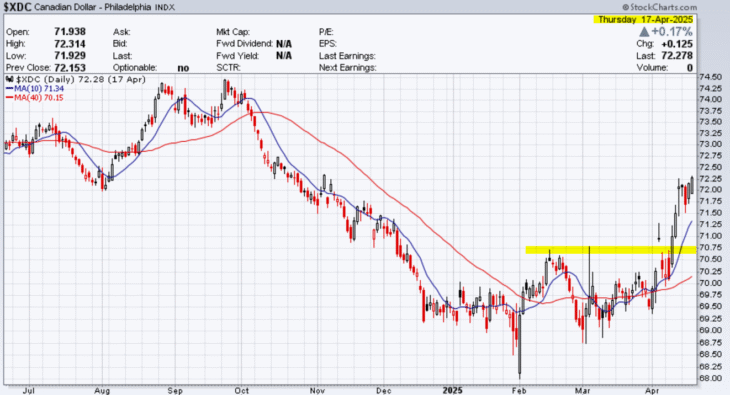
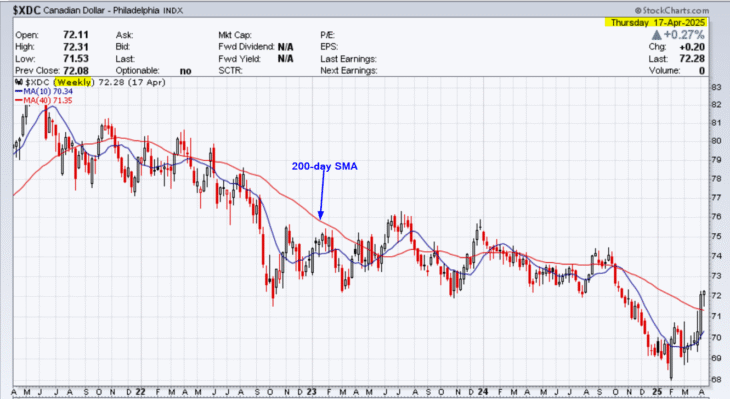
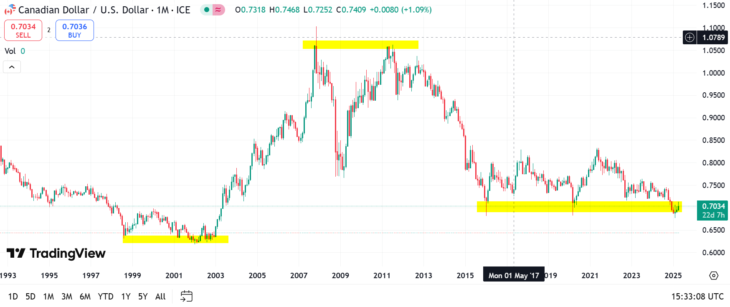
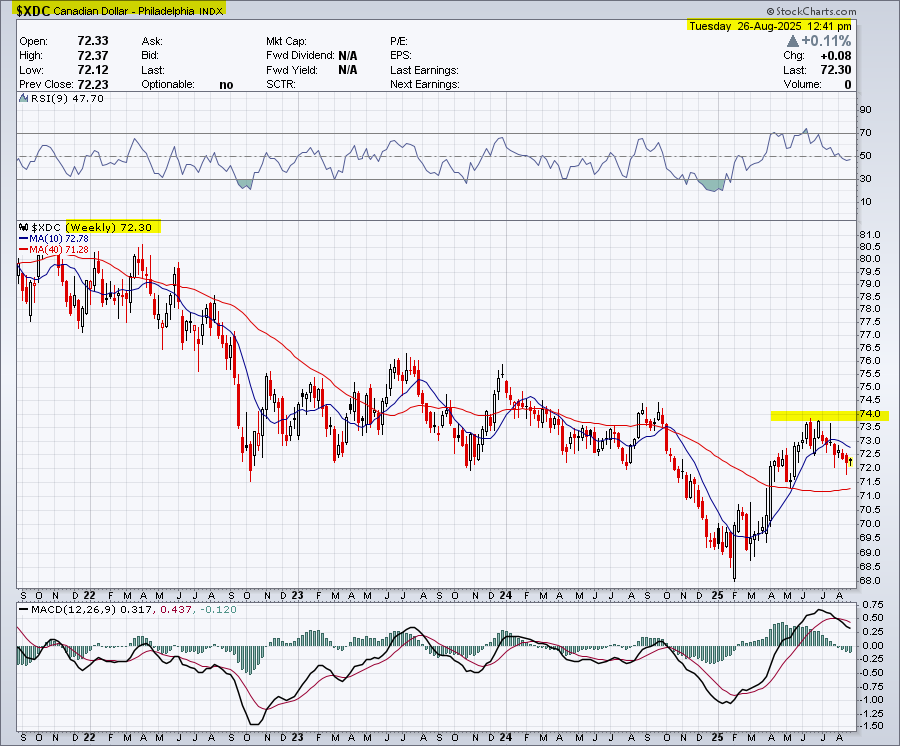
Analysis: Canadian dollar still in a major downtrend, intermediate downtrend and near-term downtrend. The major resistance point is around $0.7400 and support will be around the 200-day simple moving near $0.7100
Here is the 4-year candlestick weekly chart for the Canadian dollar.
The Canadian dollar, often referred to as the “loonie,” is the official currency of Canada. Its value is determined by supply and demand in the foreign exchange market, and it is influenced by a variety of domestic and international factors.
Current Exchange Rates
As of August 26, 2025, the value of the Canadian dollar is approximately:
- 1 CAD = $0.72 USD
- 1 CAD = €0.62 EUR
- 1 CAD = £0.54 GBP
Factors Influencing the Canadian Dollar
- Commodity Prices: Canada is a major exporter of natural resources, especially oil. As a result, the value of the Canadian dollar is highly correlated with global commodity prices. When oil prices rise, the CAD tends to strengthen, and when they fall, it tends to weaken.
- Monetary Policy and Interest Rates: The Bank of Canada (BoC) sets the key policy rate, which is a major tool for controlling inflation and influencing the economy. Higher interest rates in Canada, relative to other countries, can attract foreign investment and increase the demand for the Canadian dollar, leading to a stronger currency.
- Current Interest Rate: As of July 30, 2025, the Bank of Canada’s target for the overnight rate is 2.75%.
- Next Announcement: The next scheduled interest rate announcement is on Wednesday, September 17, 2025.
- Economic Health: The overall health of the Canadian economy, including factors like GDP growth, inflation, and unemployment, plays a significant role in the currency’s value. A strong economy typically supports a stronger currency.
- U.S. Economy and Trade: The United States is Canada’s largest trading partner. Therefore, the economic performance of the U.S. and the trade relationship between the two countries have a substantial impact on the Canadian dollar.
- Current Account and Public Debt: A country’s current account balance (the balance of trade in goods, services, and payments) and its level of public debt can also affect its currency. A trade surplus can put upward pressure on the currency, while a large public debt can make a country less attractive to foreign investors.
_____________
Technical Analysis is about trading with the trend
Note: This technical analysis is for educational purposes. Please conduct your own analysis or consult a financial advisor before making investment decisions. The author of this article may hold long or short positions in the featured stocks or indexes.
© 2025 TradeOnline.ca InvestOnline.ca ChartAnalysis.ca
Contact: [email protected]