A hyperscaler is a massive cloud service provider that offers computing, storage, and networking infrastructure on an enormous, globally distributed scale.
The term comes from hyperscale computing, an IT architecture designed to seamlessly scale up to thousands (or millions) of servers to handle massive, fluctuating workloads without compromising performance or reliability.
If a traditional data center is a localized warehouse, a hyperscaler is a global logistics network.
Who are the Major Hyperscalers?
While many companies provide cloud hosting, only a handful have the capital and physical footprint to be considered true hyperscalers. The market is dominated by the “Big Three”:
Amazon Web Services (AWS): The global market leader, holding the largest share of cloud infrastructure.
Microsoft Azure: Heavily integrated into enterprise ecosystems and deeply tied to corporate IT environments.
Google Cloud Platform (GCP): Known for its high-performance data analytics and native AI capabilities.
Other notable players include Meta (which operates at hyperscale primarily for its own family of apps), Alibaba Cloud (dominant in Asia), and Oracle Cloud Infrastructure (OCI).
Key Characteristics of a Hyperscaler
To be classified as a true hyperscaler by industry standards (like the International Data Corporation), a provider generally must meet several massive criteria:
Physical Footprint: They must operate facilities housing at least 5,000 servers (though the top players house hundreds of thousands of servers across millions of square feet).
Elasticity (Horizontal & Vertical Scaling): Hyperscalers can scale resources horizontally (adding more servers to a network) or vertically (adding more power to an existing server) in seconds via automated software orchestration.
Global Redundancy: They operate across dozens of geographic “Regions” and “Availability Zones.” If an entire data center facility loses power or suffers a natural disaster, workloads are automatically and seamlessly redirected to a backup facility halfway across the world without the end-user noticing.
Why Hyperscalers Matter (Especially in 2026)
Historically, hyperscalers were used to host massive websites, stream video content (like Netflix on AWS), or manage enterprise databases. However, the rise of the Artificial Intelligence boom has made them the literal backbone of the global economy.
1. The AI Powerhouse
Training and running Large Language Models (LLMs) requires an astronomical amount of computational power. Hyperscalers are the only entities capable of buying, cooling, and networking tens of thousands of specialized AI microchips (like NVIDIA GPUs) into unified “superclusters.”
2. Shifting CapEx to OpEx
Before hyperscalers, if a company wanted to launch a new software application, they had to spend millions buying physical servers, renting a building, and hiring technicians (Capital Expenditure, or CapEx). With a hyperscaler, they pay a monthly bill only for the exact computing seconds they use (Operational Expenditure, or OpEx).
3. The “Platform” Ecosystem
Hyperscalers no longer just rent out raw computer chips and digital storage space. They offer thousands of pre-built, managed services—including cybersecurity firewalls, automated data analytics, blockchain nodes, and out-of-the-box AI training modules—allowing businesses to innovate rapidly.
Summary: Traditional Data Center vs. Hyperscaler
Feature
Traditional Data Center
Hyperscaler Cloud
Size
Typically under 10,000 sq. ft.
Massive complexes, often the size of football fields.
Server Count
Hundreds to a few thousand.
Hundreds of thousands to millions globally.
Scaling Speed
Requires manually ordering and installing hardware (weeks/months).
His first year back in office was the most profitable of his life, bestowing US$3-billion in wealth on the family fortune, according to Forbes.
Mr. Trump’s self-enrichment campaign comes at a cost to us all. It rips off those on the other side of those trades. And it undermines the fairness of the public markets.
In March, more than US$800-million worth of oil futures changed hands just minutes before Mr. Trump announced on Truth Social that strikes on Iran’s infrastructure would be postponed, according to the Wall Street Journal.
Same thing a couple weeks ago, as detailed by the influential market commentator The Kobeissi Letter. In the early hours of May 6, someone bet nearly US$1-billion on crude oil shorts, which pay off if the price of oil drops. About an hour later, Axios reported that a deal to end the war in Iran was in the works. Oil prices quickly dove by 12 per cent, and those shorts netted a cool US$125-million.
The Canadian ETF industry has experienced an unprecedented boom, with total Assets Under Management (AUM) officially crossing the $800 billion CAD milestone. A massive chunk of this capital is heavily concentrated among the “Big Three” issuers: BlackRock (iShares), Vanguard, and BMO.
The largest Canadian-listed ETFs, categorized by their distinct investment styles, dominate the retail and institutional landscape.
1. Core Broad-Market Equity (Passive Indexing)
These are the heavyweights of the Canadian financial system. They track massive, cap-weighted indices to give investors low-cost, bedrock exposure to Canadian and U.S. stock markets.
iShares Core S&P/TSX Capped Composite Index ETF (XIC): Standing as one of the single largest ETFs in Canada at ~$25.2 billion AUM, XIC tracks the entire Canadian stock market (large, mid, and small-cap).
iShares S&P/TSX 60 Index ETF (XIU): At ~$21.4 billion AUM, this is the evolution of the world’s very first ETF. It strips out smaller companies and holds just the 60 blue-chip giants of the TSX.
Vanguard S&P 500 Index ETF (VFV): This is the go-to vehicle for Canadians seeking unhedged exposure to the U.S. stock market. It has consistently been one of the fastest-growing funds in Canada due to its rock-bottom management fee (0.08%).
BMO S&P/TSX Capped Composite Index ETF (ZCN): BMO’s primary domestic heavy-hitter sitting at ~$14.7 billion AUM, mirroring XIC’s broad strategy with ultra-low costs.
2. Asset Allocation (“All-in-One” Portfolios)
This style represents a major shift in how Canadians build portfolios. These funds handle automatic rebalancing across global equities and fixed income within a single ticker. It is the fastest-growing investment style, drawing massive inflows.
iShares Core Equity ETF Portfolio (XEQT): Holding roughly $6.7 billion+ AUM, XEQT is an aggressive 100% equity portfolio holding over 9,000 global stocks (split across the U.S., Canada, International, and Emerging Markets).
Vanguard All-Equity ETF Portfolio (VEQT): Vanguard’s direct competitor to XEQT, also maintaining a pure 100% stock structure with slightly different regional weightings.
Vanguard Growth ETF Portfolio (VGRO): The quintessential “Growth Balanced” option, keeping a strict 80% equity / 20% fixed income split for investors who want a minor bond cushion.
3. Fixed Income & Aggregate Bonds
When equity markets see volatility or interest rate projections shift, capital floods back into these foundational bond packages.
BMO Aggregate Bond Index ETF (ZAG): Holding ~$10.04 billion AUM, ZAG is the giant of Canadian fixed income. It provides comprehensive exposure to investment-grade government, provincial, and corporate bonds.
iShares Core Canadian Universe Bond Index ETF (XBB): A close rival to ZAG, offering a nearly identical diversified bond mix to anchor traditional 60/40 balanced portfolios.
4. Dividend & Income-Focused (High Yield)
Canadian investors traditionally love cash flow, making dividend and specialty income styles incredibly lucrative.
Vanguard FTSE Canadian High Dividend Yield Index ETF (VDY): With ~$3.34 billion AUM, VDY tracks the highest-yielding blue chips in Canada. Because the TSX is top-heavy, it leans aggressively into the Big Banks and massive energy infrastructure providers (like Enbridge).
The Covered Call Phenomenon: While funds like VDY dominate traditional indexing, Enhanced/Covered Call ETFs (managed by firms like Global X and BMO) are surging. They overlay option-writing strategies onto equity baskets to manufacture yields north of 7–9% for income-starved retirees.
5. Cash & Liquid Money Market
When investors want to sideline cash while earning a risk-free yield, they look to High-Interest Savings Account (HISA) and Money Market ETFs.
Purpose High Interest Savings ETF (PSA): At ~$3.35 billion AUM, PSA pools investor capital to purchase high-interest cash accounts directly from Canada’s Tier-1 banks, paying out monthly interest.
BMO Money Market Fund (ZMMK): An ultra-short-term safety play that invests in corporate promissory notes and treasury bills, built for maximum capital preservation.
At-A-Glance structural Overview
Investment Style
Top Representative
Ticker
Core Exposure Focus
Typical Cost (MER)
Broad Market Domestic
iShares Core S&P/TSX
XIC
~200+ Canadian Stocks
~0.06%
Broad Market US
Vanguard S&P 500
VFV
500 Largest US Stocks
~0.09%
Fixed Income
BMO Aggregate Bond
ZAG
Gov & Corp Canadian Bonds
~0.09%
All-in-One Global
iShares Core Equity
XEQT
100% Global Stocks
~0.20%
High Dividend
Vanguard High Div Yield
VDY
Canadian Banks & Energy
~0.22%
Cash / Capital Pres.
Purpose High Interest
PSA
Cash Deposits at Big Banks
~0.15%
The Current Landscape Trend
The overarching theme is a flight toward simplification. Instead of buying 5 or 6 regional ETFs, both retail investors and professional advisors are increasingly relying on All-in-One funds like XEQT or VEQT for their core equity weightings, and adding specific aggregate bond or high-dividend overlays to tilt toward their specific income needs.
Technical Analysis is about trading with the trend
Note: This technical analysis is for educational purposes. Please conduct your own analysis or consult a financial advisor before making investment decisions. The author of this article may hold long or short positions in the featured stocks or indexes. The article was written with the help of AI and was reviewed by an editor.
While many people mistakenly assume the United States created the vehicle, Canada beat Wall Street to the punch by nearly three years.
The Birth of the ETF: TIPs 35
On March 9, 1990, the Toronto Stock Exchange (TSX) launched the Toronto 35 Index Participation Units (TIPs).
What it did: It allowed retail and institutional investors to buy a single basket of securities that tracked the 35 largest companies in Canada.
The Legacy: TIPs served as the global prototype for what we know as the modern ETF. Over the years, it evolved and is still traded today as the iShares S&P/TSX 60 Index ETF (XIU), making it the oldest existing ETF in the world.
The Common Misconception: The U.S. “Spider”
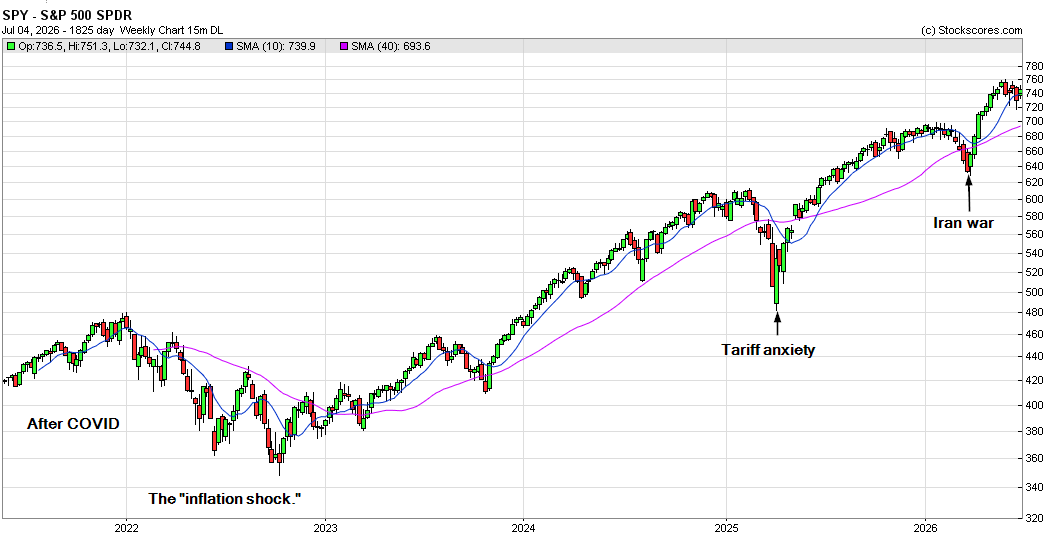
The reason most people think the U.S. invented the ETF is because of the massive popularity of the SPDR S&P 500 ETF Trust (SPY).
State Street and the American Stock Exchange (AMEX) launched SPY in January 1993.
While SPY didn’t come first, it revolutionized the global market structure because it was the first to successfully automate the creation/redemption mechanism at a massive scale. Today, it remains the largest ETF in the world.
Canada’s History of “Firsts”
Following the success of TIPs, Canada’s favorable regulatory environment turned Bay Street into a testing ground for investment innovation:
1990: World’s first Equity ETF (TIPs)
2000: World’s first Fixed-Income/Bond ETF (iShares Core Canadian Universe Bond Index ETF)
2021: World’s first retail Bitcoin ETF (Purpose Bitcoin ETF)
The Big Picture: What started as a niche experiment in Toronto in 1990 completely transformed global investing, democratizing diversification for everyday retail investors.
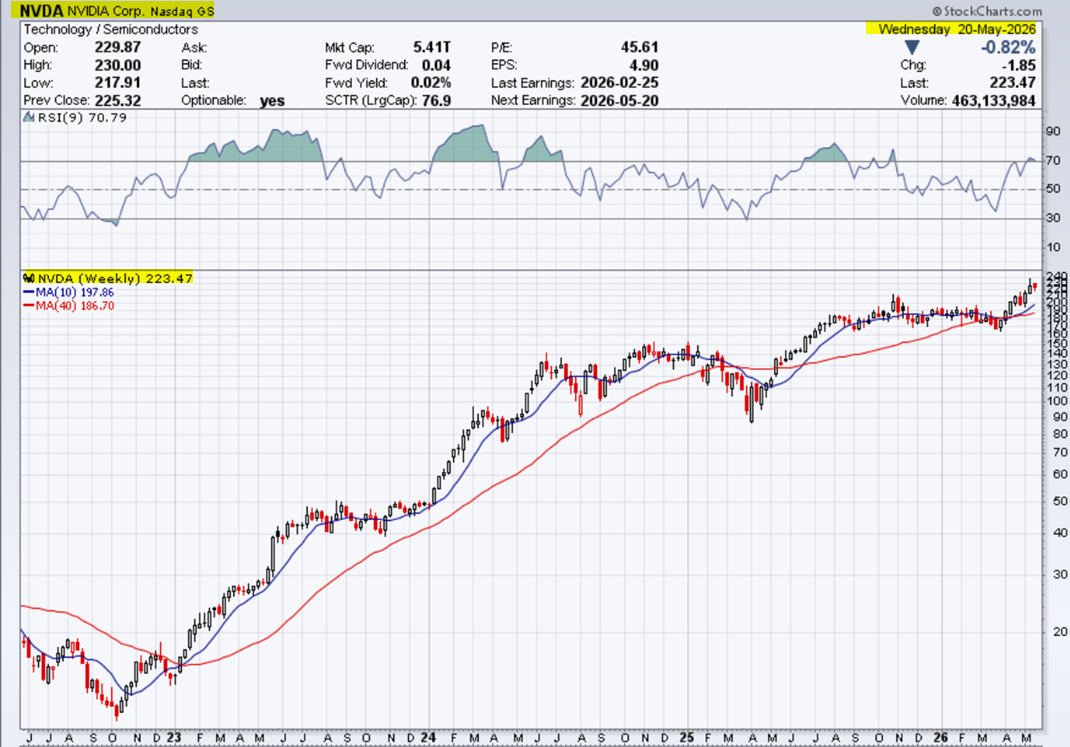
As NVIDIA (NVDA) hovers around a $5.5 trillion market cap—trading in the $220 to $225 range—its valuation presents a fascinating paradox. While it remains one of the most valuable companies in the world, its valuation multiples have quietly compressed to near-historical lows relative to its massive earnings power.
1. Price-to-Earnings (P/E) Metrics
NVIDIA’s valuation looks drastically different depending on whether you look backward or forward.
Trailing P/E (LTM): ~42x – 45x Based on trailing twelve-month earnings, NVIDIA trades at roughly 43 times earnings. While this is a premium compared to the broader S&P 500 (average ~20x), it represents a monumental drop from the peak AI euphoria of 2023, when its trailing P/E routinely cleared 140x to 240x.
Forward P/E (NTM): ~25x – 27x Looking at expected earnings over the next 12 months, the multiple drops significantly. A forward P/E in the mid-20s places NVIDIA in line with—or even cheaper than—large-cap tech peers like Microsoft and Apple, and vastly cheaper than direct semiconductor rivals like AMD (which trades at a much higher trailing multiple due to lower absolute earnings).
2. Historical Context: The “Compression” Story
NVIDIA is currently trading below its own long-term historical valuation averages.
Its 3-year average P/E sits at ~53x.
Its 5-year average P/E sits at ~63x.
Its 10-year historical average sits at ~64x.
Even before the generative AI boom, the market always commanded a premium for NVIDIA due to its gaming and crypto tailwinds. At ~42x trailing earnings today, the stock is being priced more like a mature, high-quality growth business rather than a speculative momentum trade.
3. Other Critical Valuation Metrics
Gross & Net Profit Margins (The Moat)
What prevents NVIDIA’s P/E from skyrocketing alongside its stock price is its unprecedented profitability.
Gross Margins: Sustaining at an incredible ~75%.
Net Profit Margins: Reached an extraordinary 71% in the most recent Q1 earnings report (Net Income of $58 billion on $82 billion in revenue).
PEG Ratio (Price/Earnings-to-Growth): ~0.6x – 1.0x
When factoring in growth, NVIDIA looks remarkably inexpensive. A PEG ratio below 1.0 traditionally indicates that a stock is undervalued relative to its growth rate. With Wall Street projecting aggregate earnings growth of over 70% for NVIDIA this fiscal year, its PEG ratio remains highly attractive.
Price-to-Sales (P/S) Ratio: ~22x
This remains NVIDIA’s most expensive metric. A P/S ratio above 20x is historically risky for hardware companies, but it reflects the absolute monopoly NVIDIA currently maintains over tier-one AI data center deployments (Blackwell and upcoming Rubin architectures).
4. The Valuation Debate: Hardware vs. “Tokenomics”
The primary disconnect between structural bulls and bears comes down to how you define NVIDIA’s business model:
The Bear Case (Hardware Cycle): Hardware multiples eventually mean-revert. Hyperscaler (Microsoft, Google, AWS) capex will eventually plateau, enterprise hardware cycles will turn, and competitive pressure from AMD or custom in-house silicon will erode those 75% gross margins.
The Bull Case (“Tokenomics” Factory): CEO Jensen Huang argues that framing NVIDIA as a “chip company” is structurally incorrect. In his view, modern AI data centers are not IT costs; they are manufacturing equipment. Instead of consuming power to run software, they are factories producing a highly valuable commodity: Tokens (text, code, synthetic data, and video).
5. What is Capping the Multiples?
If earnings are beating expectations (Q1 revenue grew 85% YoY), why are the multiples compressing?
The China Hole: Direct export curbs have driven NVIDIA’s China data center revenue from $17.1 billion down to effectively zero, creating an onboarding headwind that the rest of the world has had to absorb.
Macro Geopolitics: Broad market anxiety surrounding Middle East energy shocks and sustained inflation has kept a lid on broad tech multiple expansions, preventing NVDA from re-testing its historical 60x+ valuation heights.
Technical Analysis is about trading with the trend
Note: This technical analysis is for educational purposes. Please conduct your own analysis or consult a financial advisor before making investment decisions. The author of this article may hold long or short positions in the featured stocks or indexes. The article was written with the help of AI and was reviewed by an editor.
The rally is accelerating as speculative buyers and industrial hedgers scramble to secure physical supply.
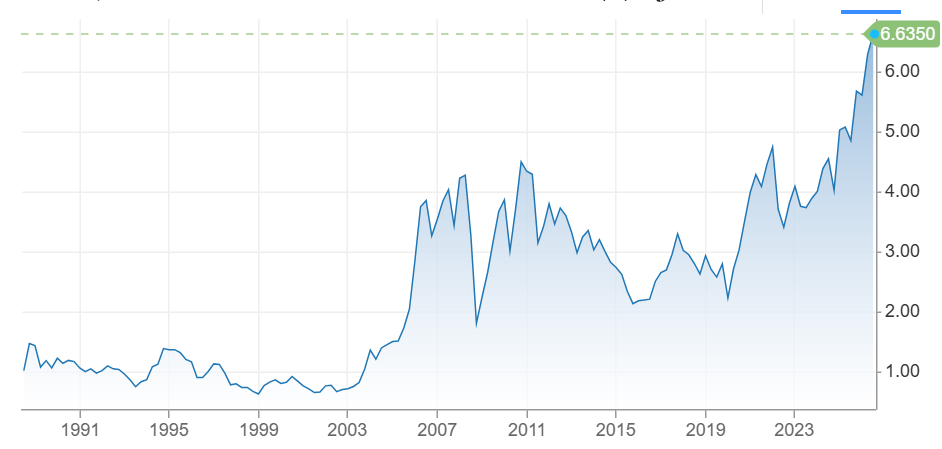
COMEX Copper: Hit a new intraday all-time high of $6.58 per pound this morning, currently settling around $6.53/lb (+1.8%).
LME Copper: Trading near $13,950 per metric ton, holding the gains from yesterday’s record settlement of $13,943.
Performance: The metal is now up approximately 15% year-to-date, with nearly 8% of those gains occurring since the intensification of the conflict in the Middle East.
Why the Rally Won’t Quit
Beyond the “Grasberg” supply shock from Freeport Indonesia, two new catalysts are dominating the tape today:
The “Strait of Hormuz” Premium: Analysts are now labeling copper a “geopolitical defensive asset.” With shipping routes through the Strait of Hormuz effectively suspended, the global refining market is facing a massive “sulphuric acid” shortage. Since sulphuric acid is critical for copper leaching, this is creating a secondary supply squeeze on top of the mining delays.
Tariff Front-Running: There is growing evidence that U.S. buyers are “front-running” anticipated 25% refined copper tariffs expected to be announced by the White House before June. This is causing a massive dislocation between US and London prices as stocks are hoarded on North American soil.
AI Data Center Demand: New reports suggest that global AI power infrastructure requirements for 2026 are 20% higher than initial projections, further tightening the structural deficit.
Technical Analysis is about trading with the trend
Note: This technical analysis is for educational purposes. Please conduct your own analysis or consult a financial advisor before making investment decisions. The author of this article may hold long or short positions in the featured stocks or indexes. The article was written with the help of AI and was reviewed by an editor.
As of April 2026, the global fiscal landscape is defined by a push-and-pull between high defense spending, massive AI infrastructure investment, and impact of elevated energy prices.
The following table ranks the G20 major economies by their projected general government budget balance (net lending/borrowing) as a percentage of GDP for the 2026 fiscal year. Countries with the highest negative percentages represent the largest deficits.
Fiscal Deficit Ranking: Major World Economies (2026 Projection)
Rank
Economy
Deficit/Surplus (% of GDP)
Primary Fiscal Drivers
1
China
-8.2%
Infrastructure stimulus and property sector support.
2
Brazil
-7.7%
Social spending and high debt-servicing costs.
3
India
-7.4%
Continued heavy capital expenditure on infrastructure.
4
United States
-5.8%
Rising mandatory spending and net interest outlays.
5
France
-4.9%
Energy transition subsidies and defense modernization.
6
South Africa
-4.9%
Support for state-owned enterprises and power grid.
7
United Kingdom
-3.9%
Public service funding and debt interest volatility.
8
Germany
-3.8%
Defense “Zeitenwende” and industrial energy support.
9
Saudi Arabia
-3.5%
Vision 2030 mega-projects and oil price volatility.
10
Mexico
-3.5%
Social programs and Pemex financial support.
11
Turkey
-3.4%
Earthquake reconstruction and inflation mitigation.
12
Indonesia
-2.9%
New capital city (Nusantara) development.
13
Italy
-2.8%
Phasing out of “Superbonus” construction incentives.
14
Canada
-2.7%
Provincial healthcare transfers and housing initiatives.
15
Australia
-2.4%
Transitioning back to deficit as commodity prices ease.
16
Japan
-2.0%
Demographic-driven social costs vs. tax revenue growth.
17
Russia
-2.0%
Sustained military expenditures.
18
South Korea
-1.5%
Semiconductor subsidies and aging population costs.
19
Argentina
+0.5% (Surplus)
Strict fiscal austerity and subsidy removals.
20
Singapore
+3.3% (Surplus)
High corporate tax revenue and prudent reserve policy.
Key Macro Trends for 2026
The Interest Burden: For advanced economies like the United States and France, net interest payments are consuming an increasing share of GDP. Projections show US interest costs reaching 3.5% of GDP this year, nearly equal to its defense budget.
Defense & Technology: In Europe, the -3.8% to -4.9% deficits are increasingly driven by a permanent shift in defense spending targets (approaching 2.5% to 3.0% of GDP). Globally, fiscal incentives for AI and semi-conductors have become a “baseline” expenditure for major economies.
The Austerity Exception:Argentina remains a notable outlier, shifting from a deep deficit to a marginal surplus following radical fiscal restructuring, though this has come at the cost of significantly suppressed domestic consumption.
Following the fiscal deficit projections, the general government gross debt-to-GDP ratio provides a clearer picture of the total accumulated debt relative to each country’s economic output.
As of April 2026, debt levels remain elevated across advanced economies due to high interest rates and the expansion of industrial and defense subsidies. The following table ranks the G20 major economies by their projected debt-to-GDP ratios for the 2026 fiscal year, based on the latest IMF World Economic Outlook data.
Public Debt-to-GDP Ranking: Major World Economies (2026)
Rank
Economy
Debt-to-GDP (%)
Context & Fiscal Drivers
1
Japan
230.1%
Decades of stimulus and an aging population.
2
Singapore
172.5%
High, but primarily used for sovereign investment.
3
Italy
137.4%
Persistent structural debt and high servicing costs.
4
United States
125.8%
Rising interest outlays and mandatory spending.
5
France
118.4%
Post-pandemic recovery spending and defense.
6
Canada
114.2%
High household and provincial-level debt.
7
United Kingdom
103.6%
Elevated public service spending vs. slow growth.
8
Spain
98.2%
Gradual deleveraging from pandemic-era peaks.
9
China
96.3%
Rapid rise due to local government and property support.
10
Euro Area (Avg)
87.8%
Broad regional average across EU member states.
11
Brazil
84.5%
High social expenditure and borrowing costs.
12
India
81.9%
Heavy infrastructure spending to fuel 6.5% growth.
13
Argentina
78.4%
Down from previous highs due to strict austerity.
14
South Africa
77.1%
State-owned enterprise support (Energy/Transport).
15
Germany
64.0%
Constrained by the constitutional “debt brake.”
16
South Korea
54.4%
Increasing support for semiconductor and tech R&D.
17
Australia
51.3%
Strong commodity exports helping offset debt.
18
Mexico
45.4%
Disciplined fiscal policy relative to regional peers.
19
Saudi Arabia
32.1%
Low debt, but rising due to “Vision 2030” projects.
20
Russia
19.1%
Heavily sanctioned and isolated from global markets.
Critical Observations
The $100% Threshold: A majority of the G7 nations (Japan, Italy, US, France, Canada, UK) are now operating with debt levels exceeding 100% of their GDP. This creates a “fiscal squeeze” where a growing portion of tax revenue must be diverted to pay interest rather than funding infrastructure or services.
The “Investment” Outlier:Singapore remains the exception to the rule. Unlike other nations, its debt is not used to fund budget deficits but is instead issued to provide a pool of assets for the Central Provident Fund and for reinvestment by its sovereign wealth funds (GIC/Temasek).
China’s Trajectory: China has seen one of the fastest debt increases in the G20, rising from roughly 60% in 2019 to over 96% today, as the central government absorbs the liabilities of local governments and the struggling property sector.
Note: Published with the assistance of AI and reviewed by an editor.
In early 2026, the software sector entered what analysts have dubbed the “SaaS-pocalypse.” The primary driver is a shift from “SaaS” (Software as a Service) to “AaaS” (Agents as a Service), where autonomous AI agents perform tasks that previously required human users to log into a dashboard.
This shift has created a “Seat Compression” crisis: if AI can do the work of five people, companies no longer need to pay for five software “seats” or licenses.
1. Customer Relationship Management (CRM) & Sales
These companies are at the center of the “seat compression” narrative because AI can now autonomously draft emails, update records, and qualify leads.
Salesforce (CRM): Despite launching Agentforce, Salesforce hit 52-week lows in February 2026. Investors fear that “AI Agents” will eventually eliminate the need for the thousands of human sales reps who currently use the platform.
HubSpot (HUBS): Similar to Salesforce, HubSpot has seen its valuation reset. While they have pivoted to a “usage-based” model to combat seat loss, the market remains skeptical that AI “credits” will fully replace the high margins of per-user subscriptions.
Zendesk (Private/Competitor): Though private, Zendesk is frequently cited in analyst notes as a “canary in the coal mine,” as AI chatbots now resolve over 70–80% of customer tickets without a human agent.
2. Creative & Design Software
The concern here is that generative AI allows non-experts to create professional-grade content, threatening the “pro-tool” moat.
Adobe (ADBE): Adobe hit a fresh 52-week low in April 2026. Despite its Firefly AI, investors are worried that specialized AI video tools (like OpenAI’s Sora or Luma) and “one-click” design platforms will erode Adobe’s dominance among creative professionals.
Unity (U): Facing competition from AI-driven game engines that can generate 3D environments from text, reducing the need for specialized developers and complex seat-based tooling.
3. Enterprise Workflow & IT Service Management (ITSM)
These platforms manage the “plumbing” of a company. AI is now “self-healing” many IT issues before a ticket is even created.
ServiceNow (NOW): Recently downgraded by major firms like UBS in April 2026. The threat is twofold: Salesforce’s Agentforce is directly attacking their IT service niche, and AI automation is reducing the human “troubleshooters” who use the platform.
Atlassian (TEAM): As mentioned in your earlier review, Atlassian faces “channel friction” as AI agents begin to automate project management and coding tasks (Jira/Confluence), potentially lowering the total headcount of developer teams.
4. Cybersecurity & Data Governance
AI has made “low-cost coding” possible, allowing startups to replicate complex security features that previously took years to build.
Varonis Systems (VRNS): Saw a significant stock drop in April 2026. Analysts are concerned that autonomous AI security systems could replace traditional data governance tools by managing permissions and threats in real-time without human intervention.
Okta (OKTA): Fears that AI-driven identity management will become a feature of the “operating system” or the cloud provider (Google/Microsoft), rather than a standalone software subscription.
5. Education Technology (EdTech)
This was the first sector to be hit by the “AI Replacement” concern.
Chegg (CHGG): After a brutal 2024 and 2025, Chegg is attempting to restructure into a “skilling” company. However, it continues to struggle as students turn to LLMs for instant, free tutoring rather than paying for Chegg’s proprietary database.
Duolingo (DUOL): Shares tumbled 24% in early April 2026 after the company projected lower-than-expected bookings. The concern is that AI-powered real-time translation (like Apple Intelligence or Google Translate) makes the long-term goal of “learning a language” less essential for many travelers.
Summary of the “2026 Bear Case”
Threat Level
Industry
Primary Stock Impacted
The AI “Replacement” Logic
Critical
EdTech
Chegg, Duolingo
Free AI models replace paid proprietary content.
High
CRM / Sales
Salesforce, HubSpot
AI agents do the work, reducing “seat” counts.
Medium
Creative
Adobe
GenAI lowers the skill floor, commoditizing pro tools.
Emerging
Workflow
ServiceNow, Atlassian
Autonomous IT “self-healing” reduces service tickets.
The Bottom Line: For these stocks to recover, they must prove they can monetize AI Outcomes (e.g., charging for a successfully resolved support ticket) rather than Human Access (charging per user login).
While the “SaaS-pocalypse” of early 2026 has decimated many mid-tier software companies, a clear group of “survivors” has emerged. These companies aren’t just weathering the storm; they are thriving by successfully decoupling their revenue from “human seats” and tethering it to AI outcomes.
Here are the software survivors and the strategies they used to outrun the replacement narrative.
1. The “Infrastructure Backbone”: Microsoft (MSFT)
Microsoft is the ultimate survivor because they own the “gas” that every other AI agent needs to run.
The Strategy: While their seat-based Office 365 revenue is vulnerable to compression, they have pivoted to Azure AI. For every customer that fires a human and hires an AI agent, Microsoft still wins through the massive compute power required to run that agent.
Key Stat: In FY26 Q1, Azure revenue grew 40%, significantly outpacing the market as the “World’s AI Supercomputer.”
2. The “Back-Office Orchestrator”: ServiceNow (NOW)
ServiceNow has avoided the “seat-loss” trap by focusing on operational efficiency rather than just user headcount.
The Strategy: Their “Now Assist” AI doesn’t just help people do work; it “self-heals” IT systems. Instead of selling 10 seats to an IT desk, they sell a platform that reduces incident resolution time by 50%.
The Survivor Logic: They have successfully shifted toward “Outcome-Based Pricing,” where companies pay for the value of the resolved issue, not the number of IT staff logged in.
3. The “Creative Currency” Leader: Adobe (ADBE)
After a brutal 2025, Adobe staged a massive comeback in early 2026 by reinventing how they charge for their tools.
The Strategy: They introduced “Generative Credits” as a new form of currency. Even if a design team shrinks, the remaining members (and their AI assistants) use exponentially more credits to generate high-resolution video and 3D assets via Firefly.
The Results: In Q1 2026, Adobe reported that AI-first ARR (Annual Recurring Revenue) more than tripled year-over-year.
4. The “Data Fortress”: Palantir (PLTR)
Palantir is widely considered the strongest “pure-play” survivor because they never relied on a per-seat model to begin with.
The Strategy: Their AIP (AI Platform) acts as a “private AI factory” for government and large enterprises. They solve the “hallucination” and “security” problems that prevent companies from using raw LLMs.
The Moat: Because they integrate deep into a company’s private data, the switching costs are astronomical. They are the “brains” of the enterprise, making them irreplaceable by generic AI agents.
5. The “Usage-Based” Pioneer: HubSpot (HUBS)
While still volatile, HubSpot is being labeled a survivor because they “cannibalized themselves” before the market could.
The Strategy: In 2025, they moved to a Usage + Seat hybrid model. They aggressively launched “AI Agents” that can work alongside humans. By making the platform the home for all customer data, they ensure that even if a sales team gets smaller, the value of the data in HubSpot gets larger.
Zacks Rank: As of April 2026, it holds a Rank #1 (Strong Buy) based on its resilience in moving “upmarket.”
Comparison of Survival Strategies
The “Safe Haven” Sector: Cybersecurity
Stocks like CrowdStrike (CRWD) and Palo Alto Networks (PANW) are being viewed as “structural survivors.”
The Logic: AI has made cyberattacks faster and more frequent. You cannot fight an AI-driven attack with a human-driven defense. This has created an inelastic demand for AI-native security software, protecting their business models from seat-count volatility.
Which of these “survival” tactics do you think is most sustainable for the long term: the “tax on compute” (Microsoft) or the “success-based fees” (Salesforce)?
We use cookies to ensure that we give you the best experience on our website. If you continue to use this site we will assume that you are happy with it.