Category Archives: Other

Ontario is proposing a new class of mutual funds. Investor advocates warn the risk may not be worth the reward.

Published February 7, 2026

The following article was published in The Globe and Mail on February 7, 2026. It is well written and worth the read.


Ontario’s securities market regulator has faced pressure from Premier Doug Ford’s government to authorize a new class of mutual funds aimed at retail investors that can hold higher-risk private assets such as real estate.

The initiative is being touted as a way to give ordinary investors access to the burgeoning world of privately owned companies and assets, which are mostly only directly available to institutions and sophisticated, wealthy accredited investors.

But investor advocates say private asset investing is riskier and typically more expensive than traditional mutual funds – especially for small investors – and the advocates warn that the plan to create new private asset mutual funds could lead to investors’ money being locked up for years in long-term real estate or infrastructure projects that have extremely complex fee structures.

Doug Ford’s government is pushing regulators to authorize a new class of mutual funds aimed at retail investors that can hold higher-risk private assets such as real estate.Chris Young/The Canadian Press

Three people familiar with the process said the Ford government pushed the Ontario Securities Commission to launch the proposal as a way of raising money for big infrastructure projects. The OSC was urged to prepare a consultation paper unusually quickly, the people said, with the published result containing very little research or industry input.

The Globe and Mail has agreed not to identify the people as they are not authorized to discuss the matter publicly.

Scott Blodgett, a spokesperson for Ontario’s Ministry of Finance, said in an e-mail that while the government discusses capital‑formation initiatives with the OSC and receives updates, it “does not direct or expedite regulatory work.”

“Decisions about long‑term asset fund design, timing and investor safeguards rest solely with the OSC,” Mr. Blodgett said.

OSC spokesperson Julia Mackenzie said the commission’s proposal to launch retail private assets “dates back” to a 2021 report published by the Capital Markets Modernization Taskforce – another regulatory initiative by the Ford government.

At that time, the task force recommended the OSC write a formal proposal on retail private equity investment funds, and then seek public input. The task force said the funds could help close a “funding gap” for smaller companies. Three years later, in the fall of 2024, the OSC launched a consultation paper on retail investors’ access to long-term assets that mentioned the funds could also increase opportunities for additional funding for government infrastructure projects.

“The OSC believes it is important to be open to new and innovative financial products that can enable capital formation and provide new opportunities for investors, with appropriate oversight, disclosure and investor protections,” Ms. Mackenzie told The Globe in an e-mail.


Here is the link to read the rest of this article: Ontario is proposing a new class of mutual funds. Investor advocates warn the risk may not be worth the reward – The Globe and Mail

As of early 2026, here is an overview of the CBC (Canadian Broadcasting Corporation), including its funding, headcount, and revenue model

Published January 24, 2026

Executive Summary

The CBC is a federal Crown corporation that operates as Canada’s national public broadcaster. While it generates some of its own money, it is heavily dependent on public subsidies, which cover approximately 70-75% of its operating costs.

1. Headcount: How many people work there?

  • Total Employees: Approximately 7,500 to 8,000 permanent, full-time equivalent employees.
  • Recent Stability: In late 2023, the CBC announced plans to cut roughly 600–800 jobs (about 10% of its workforce) due to a projected budget shortfall. However, in the April 2024 Federal Budget, the government injected an additional $42 million specifically to prevent these layoffs. As of 2025/2026, the workforce has stabilized near historical levels, though attrition (not replacing people who retire) remains a tool for managing costs.

2. Public Subsidy: How much tax money do they get?

The CBC receives an annual “Parliamentary Appropriation” (taxpayer funding) voted on by the federal government.

  • Annual Public Subsidy: Approximately $1.4 Billion CAD per year.
    • Breakdown: This works out to roughly $33–$35 per Canadian per year.
    • Trend: The funding has increased slightly in nominal terms to cover inflation and salary increases, but the broadcaster argues that in “real dollars” (inflation-adjusted), its funding has declined over the last decade.
  • Recent Top-Up: The $42 million added in 2024 was a “stop-gap” measure to handle rising production costs and declining ad revenue, signalling the government’s intent to keep the current size of the organization intact for now.

3. Revenue Streams: Do they make their own money?

Yes. The CBC is not 100% publicly funded. It operates a “hybrid” model where it competes for advertising dollars against private companies (like Bell/CTV, Rogers/Citytv) and tech giants (Google/Meta).

  • Self-Generated Revenue: Approximately $400 Million – $500 Million per year.
    • This accounts for roughly 25–30% of their total budget.
  • Where the money comes from:
    1. Advertising (TV & Digital): This is the largest chunk. They run commercials on CBC Television, CBC News Network, and their websites. Note: CBC Radio does not run commercial advertisements (except for limited sponsorships).
    2. Subscription Fees: Revenue from discretionary channels (like CBC News Network) that are part of cable packages, as well as monthly subscriptions for the premium version of CBC Gem (their streaming service).
    3. Content Licensing: Selling shows (like Schitt’s Creek or Murdoch Mysteries) to other broadcasters or streamers internationally.
  • The Problem: Their “self-generated” revenue is shrinking. Traditional TV advertising is collapsing across the entire industry as money moves to digital platforms (Google/Facebook), and the CBC is struggling to replace those lost TV ad dollars with digital ones.

Summary Table (2025/2026 Estimates)

CategoryApproximate AmountNotes
Public Funding (Subsidy)~$1.4 BillionThe core grant from Parliament.
Self-Generated Revenue~$450 MillionAds, subscriptions, licensing.
Total Annual Budget~$1.85 BillionCombined operating power.
Headcount~7,800Stabilized after 2024 funding injection.

Why is this controversial?

The “Revenue Stream” is a major point of friction. Private broadcasters (like Global and CTV) argue that it is unfair for the CBC to receive $1.4 billion in tax money and compete against them for scarce advertising dollars. They argue this subsidized competition makes it harder for private Canadian news outlets to survive. The CBC counters that ad revenue is essential because the public subsidy alone is not enough to maintain its current level of services across TV, Radio, and Digital in both English and French.

CBC audience
CBC television market share
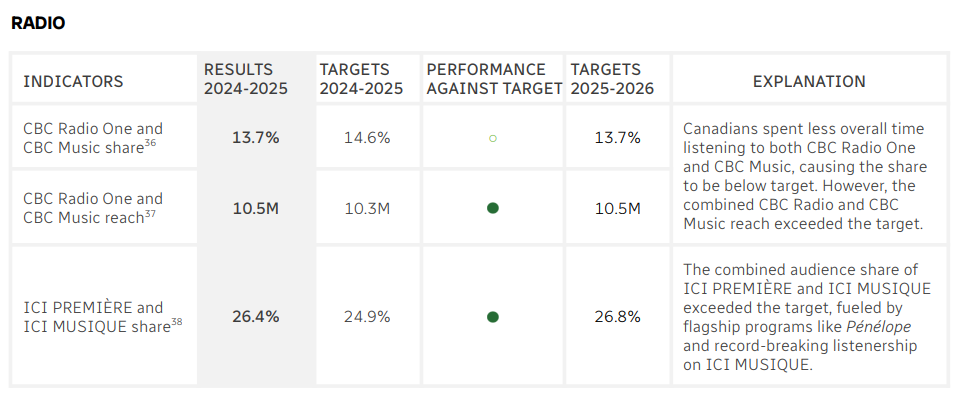
CBC radio market share
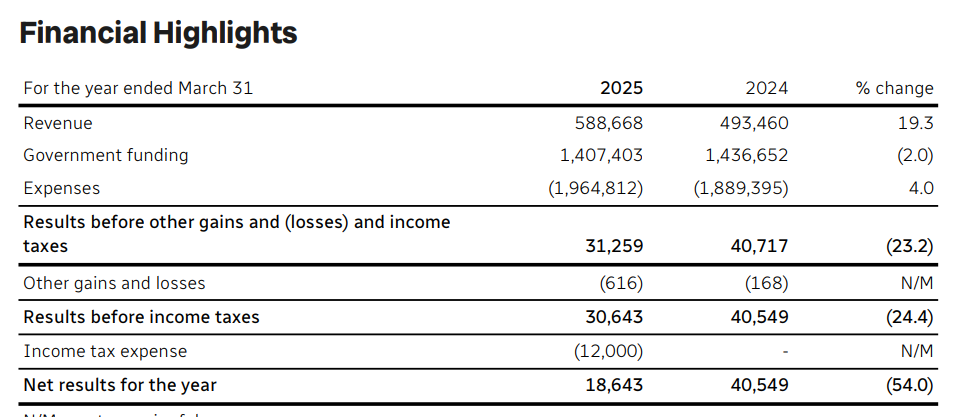
CBC financial summary
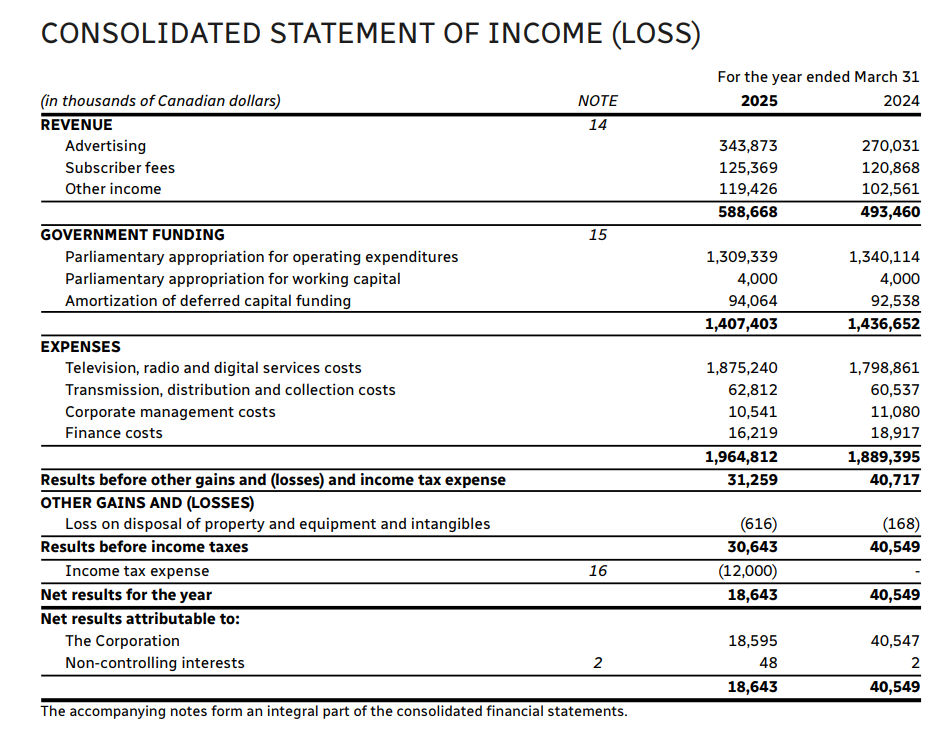
CBC income statement 2025-2024

https://cbc.radio-canada.ca/en/impact-and-accountability

https://site-cbc.radio-canada.ca/documents/impact-and-accountability/finances/2025/2024-2025-annual-report.pdf

Updated link February 11, 2026: I agree that the amount and placement of advertising was awful and disrespectable to the opening ceremonies CBC shouldn’t brush off the over 1,000 complaints it received about ads during Olympics opening ceremony – The Globe and Mail

As of 2026, standard asset allocation rules have shifted

Published January 16, 2026

As of 2026, standard asset allocation rules have shifted. Because people are living longer and inflation remains a long-term threat, the old “safe” rules are now considered risky because they often result in running out of money.

The traditional rule of “100 minus your age” (meaning a 30-year-old holds 70% stocks) is widely viewed by modern financial planners as too conservative. The new standard is closer to “110 or 120 minus your age.”

Here is the breakdown of asset allocation by age group for the current market environment.

The Master Allocation Table (2026 Standard)

This table assumes a “Moderate to Growth” mindset, which is the default for most Target Date Retirement Funds (like Vanguard or BlackRock).

Age GroupStocks (Equities)Bonds/Fixed IncomeCash/ReservesPrimary Goal
20s90% – 100%0% – 10%< 5%Aggressive Growth (Max compounding)
30s80% – 90%10% – 20%~5%Growth (Buying houses/kids, but stay invested)
40s70% – 80%20% – 30%5% – 10%Balanced Growth (Peak earning years)
50s60% – 70%30% – 40%10%Transition (Reducing volatility risk)
60s (Early)50% – 60%40% – 50%10% – 15%Preservation + Growth (Must beat inflation)
70s+30% – 40%50% – 60%10% – 20%Income & Distribution (Drawing down)

Detailed Breakdown by Decade

1. The Accumulators (Ages 20–35)

  • The Strategy: Maximum exposure to the stock market.
  • Why: You have the greatest asset of all: Time. If the market crashes 30% (like in 2020 or 2008), it is actually good for you because you are buying cheaper shares with your paycheck contributions.
  • Common Mistake: Holding too much cash. Many Gen Z investors currently hold 30%+ in cash because they fear a crash. This is a mathematical error known as “Cash Drag” that kills long-term wealth.
  • Allocation: 100% Equities (S&P 500 or Total World Stock ETFs).

2. The Builders (Ages 35–50)

  • The Strategy: High growth, but slight diversification.
  • Why: You likely have “real” liabilities now (Mortgage, RESPs for kids). You can’t afford a 100% loss, but you still need 20 years of growth before retirement.
  • Allocation: 80% Stocks / 20% Bonds.
    • Note: In 2026, with interest rates stabilized, bonds actually pay a decent yield again (unlike 2010–2021), so the 20% bond chunk finally generates income.

3. The Pre-Retirees (Ages 50–60)

  • The Strategy: The “Red Zone.”
  • Why: This is the most dangerous decade. If a massive crash happens 2 years before you retire (Sequence of Returns Risk), it can permanently delay your retirement. You must begin adding bonds to dampen the volatility.
  • Allocation: 60% Stocks / 40% Bonds.
  • The Shift: You stop asking “How much can I make?” and start asking “How much can I lose?”

4. The Retirees (Ages 60–75)

  • The Strategy: Income harvesting.
  • Why: You no longer have a paycheck. Your portfolio is the paycheck. You need safe assets (Bonds/Cash/GICs) to pay for groceries for 5–7 years so that if the stock market crashes, you don’t have to sell stocks at the bottom to eat.
  • The “Bucket” Strategy:
    • Bucket 1 (Cash/GIC): 2 years of living expenses.
    • Bucket 2 (Bonds): 5 years of living expenses.
    • Bucket 3 (Stocks): Everything else (for growth 10+ years out).

The “Rule of 120” (The Modern Formula)

If you want a quick math formula, use 120 – Age = Equity %.2

  • Example: You are 40 years old.
  • 120 – 40 = 80% Stocks. (The other 20% is bonds/cash).

Why 120 and not 100?

Because you are likely to live to 90. If you follow the old “100 minus age” rule, you would have 0% stocks at age 100. In reality, a 65-year-old retiree still needs their portfolio to grow for another 25–30 years to fight inflation.

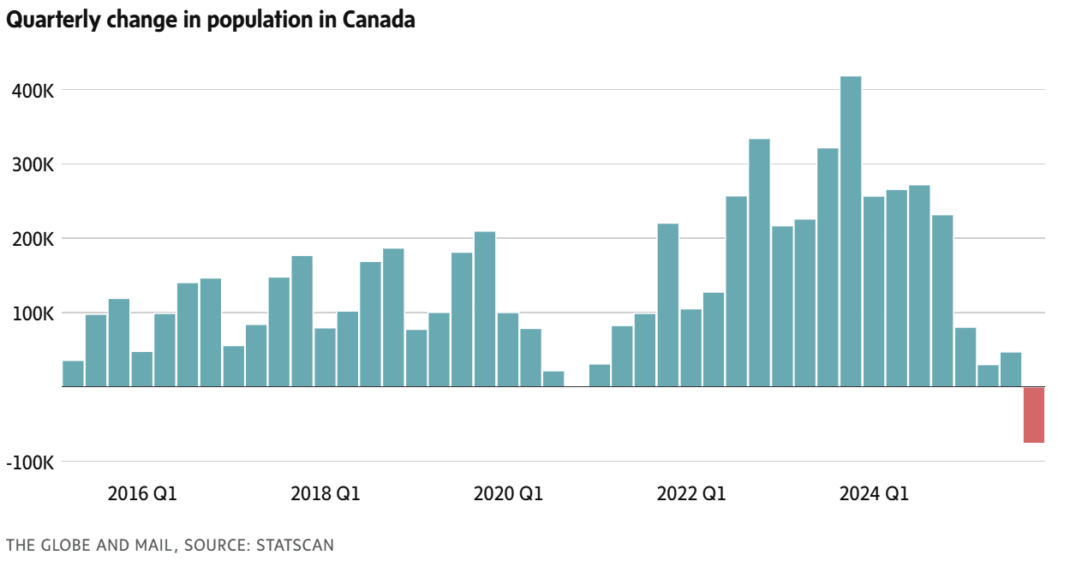
Canada reports biggest population decline on record

Published December 18, 2025

Preliminary demographic estimates indicate that Canada’s population decreased by 76,068 people (-0.2%) over the third quarter of 2025, standing at 41,575,585 on October 1, 2025.

Canada population decline

Canada reports biggest population decline on record – The Globe and Mail

https://www150.statcan.gc.ca/n1/daily-quotidien/251217/dq251217b-eng.htm?HPA=1&indid=4098-1&indgeo=0

Overview of the MAGA Movement

Published September 20, 2025

The MAGA movement, short for “Make America Great Again,” is a political movement in the United States that emerged during Donald Trump’s 2016 presidential campaign. It is characterized by a right-wing populist ideology that emphasizes American nationalism and traditional values.

Key Features

  • Origin: The slogan “Make America Great Again” was first popularized by Ronald Reagan in 1980 but was rebranded by Trump in 2012 for his political campaigns.
  • Core Beliefs: The movement advocates for:
    • Economic protectionism
    • Reduced immigration
    • “America First” policies
    • A return to what supporters view as traditional American values
  • Cultural Impact: The MAGA slogan became a cultural phenomenon, leading to various merchandise, including the iconic red hats. It has also inspired numerous parodies and derivative slogans.

Political Influence

  • Elections: The MAGA movement played a crucial role in Trump’s victories in the 2016 and 2020 elections, energizing a significant base of supporters.
  • Controversies: The movement has faced criticism for its perceived exclusionary rhetoric and has been labeled by some as extremist. It has also been associated with events like the January 6 Capitol attack, which some members initially downplayed.

Recent Developments

  • Continued Relevance: The MAGA movement remains influential in American politics, with ongoing discussions about its future and impact on the Republican Party. Variants like “Dark MAGA” have emerged, advocating for a more aggressive approach to Trumpism.

The MAGA movement continues to shape political discourse in the U.S., reflecting deep divisions in contemporary American society.

Published with the help of AI and reviewed by an editor

Questrade timeout of 15 minutes is crazy for a trading platform

Maybe ok for a banking site but not a trading platform. There is no user interface to adjust the timeout. Also, the site can be unstable and reload as you are about to execute a trade.

Questrade timeout is 15 minutes

Here is the AI feedback on Questrade timeouts:

The Questrade trading platform has different timeout behaviors depending on whether you are using the Web platform or the Edge Desktop software.

Here is the breakdown of the timeouts for each version:

1. Questrade Web (Browser)

  • Timeout Duration: Approximately 15 to 20 minutes of inactivity.
  • Customization: You cannot change this. It is a hard-coded security setting.
  • Behavior: If you do not click or interact with the page for roughly 20 minutes, you will be automatically logged out and forced to re-enter your password and 2FA code.
  • Workaround: There is no official setting to extend this. Active traders generally avoid the web platform for this reason.

2. Questrade Edge Desktop (Downloadable Program)

  • Timeout Duration: Indefinite (up to 24 hours).
  • Behavior: This platform is designed for active traders. As long as the application remains open and your computer does not go to sleep, you will stay logged in for the entire trading day (including pre-market and post-market).
  • Requirement: You must disable your computer’s “Sleep” mode to ensure the connection isn’t severed, which would force a logout.

3. Questrade Mobile App

  • Timeout Duration: Short (often 5–10 minutes of background activity).
  • Behavior: If you minimize the app or lock your screen, it will usually require you to re-authenticate when you reopen it.
  • Best Practice: Enable Biometric Login (Face ID or Fingerprint) in the app settings. This doesn’t stop the timeout, but it makes logging back in instant.

Summary

If you need to keep the platform open on a second monitor all day without being logged out, you must download and use the Questrade Edge Desktop version. The web browser version will consistently log you out for security reasons.